



Artificial intelligence is changing how education can be delivered, supported, and experienced. What was once limited to basic digital learning tools is developing into more adaptive systems that can assist teachers, respond to individual learning needs, and make educational content more interactive.
The opportunity is not simply to put more technology into classrooms. It is to use technology thoughtfully to support better teaching and learning outcomes.
AI has the potential to improve teaching and learning, but its use should remain human-centered, inclusive, and equitable.
The Rise of the Smart Classroom
A smart classroom brings digital technology into the learning environment to create more interactive and flexible ways of teaching. AI can take this further by helping teachers access information, develop learning materials, analyze student progress, and provide additional support during lessons.
Instead of relying solely on conventional teaching materials, educators can incorporate interactive digital content, AI-powered assistants, automated assessments, and multimedia resources into their lessons.
The goal is not to replace the teacher. Rather, technology can take on some supporting tasks while teachers remain responsible for guiding students, encouraging discussion, and making decisions based on their understanding of the classroom.
Moving Toward Personalized Learning
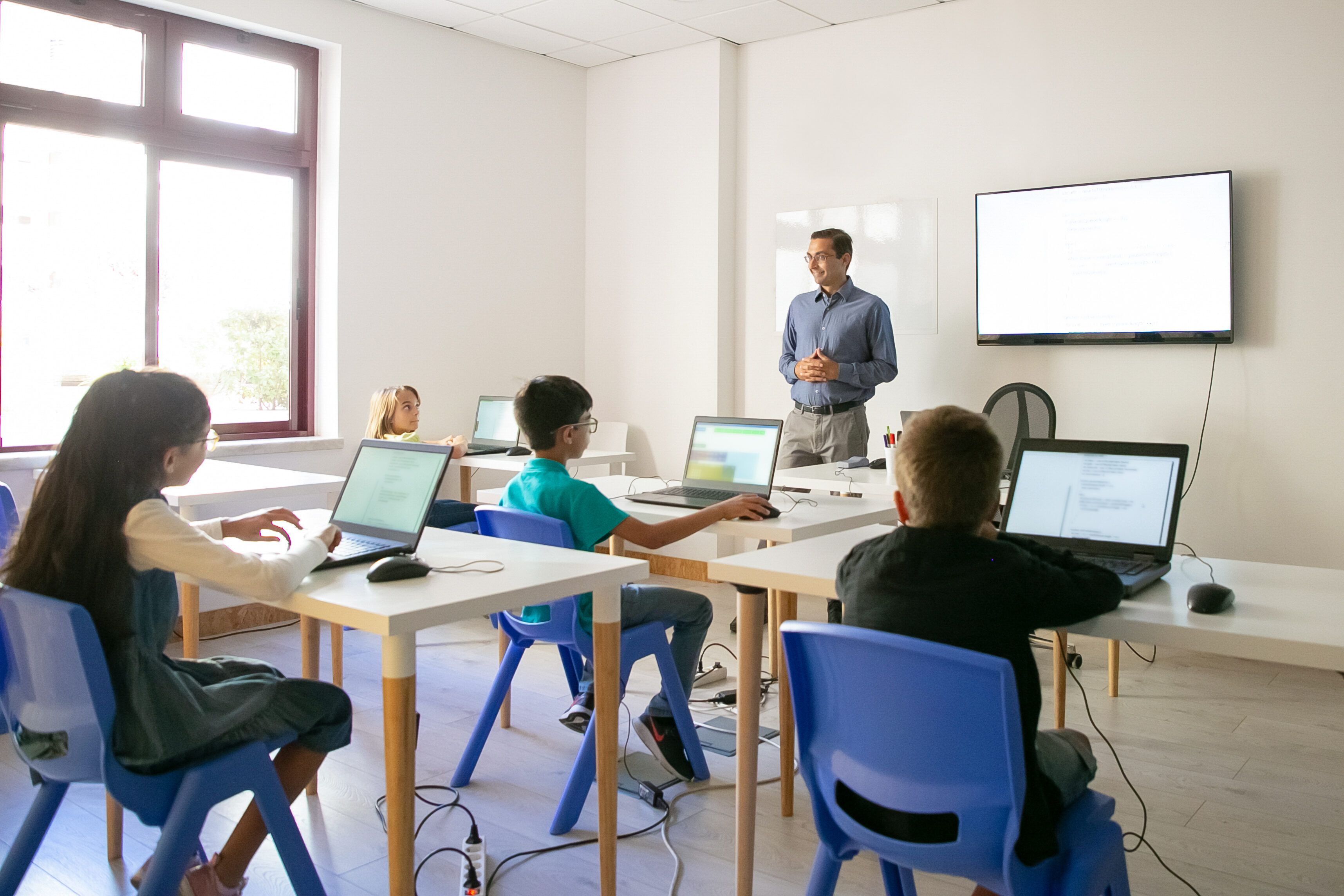
One of AI's most promising applications in education is personalization.
Students do not necessarily learn at the same pace or respond to the same teaching methods. AI-powered learning systems can help identify areas where students may need additional support and adapt exercises, feedback, or learning materials accordingly.
Research on personalized learning has explored hybrid approaches in which AI and teachers work together, with AI supporting tasks such as identifying knowledge gaps and adjusting feedback or learning activities.
This creates the possibility of a learning environment where students receive more relevant support without requiring teachers to manually customize every element of the learning experience.
AI as a Learning Assistant
AI can also provide students with another layer of academic support outside traditional classroom interactions.
AI-powered educational assistants can help explain concepts, answer questions, generate practice exercises, and provide feedback. For teachers, similar systems can assist with lesson planning, content creation, and administrative tasks.
However, effective educational AI depends heavily on how it is designed and used. Generative AI can support learning when guided by clear pedagogical principles, while simply outsourcing tasks to AI may improve the quality of an assignment without necessarily producing genuine learning gains.
This distinction is important: AI should support learning, not simply make completing schoolwork easier.
Making Learning More Interactive
Beyond personalization, AI can make educational experiences more engaging by introducing new ways for students to interact with information.
Interactive displays, AI-powered educational assistants, virtual characters, and intelligent learning tools can turn conventional lessons into more dynamic experiences. Students can ask questions, explore concepts, practice what they have learned, and receive immediate feedback within the same learning environment.
This approach can be particularly useful when combined with existing teaching materials. Instead of replacing textbooks or established curricula, AI can provide additional layers of interaction around them.
The Teacher Remains Central
The growing role of AI in education does not diminish the importance of teachers. In fact, it places greater emphasis on the teacher's role as a guide, facilitator, and critical decision-maker.
AI should empower teachers and learners rather than replace human expertise. Its adoption also requires careful consideration of privacy, equity, ethical use, and appropriate institutional policies.
For educational institutions, successful AI adoption therefore requires more than introducing new technology. Teachers need the knowledge and support to use these tools effectively, while students need to develop the ability to engage with AI critically and responsibly.
Building the Classroom of Tomorrow

The future of AI in education is unlikely to be defined by a single technology. Instead, it will involve an ecosystem of tools working alongside educators and students—from intelligent learning assistants and interactive smartboards to personalized learning systems and digital educational platforms.
At ASIX, this approach is reflected in solutions such as the Promethean AI SmartBoard, which brings AI-powered educational capabilities into the classroom. By combining interactive technology with AI-based learning assistance, smart classroom solutions can provide teachers and students with new ways to access information, engage with educational content, and support learning activities.
The objective is ultimately not to make classrooms more technologically complex, but more responsive to the people inside them.
As AI continues to develop, the most meaningful progress in education will come from finding the right balance between technology and human expertise—using AI to support teachers, personalize learning, and give students more opportunities to engage, explore, and learn.